
HARDCORE
Photography: Frank Stelitano
In Hannes Peer’s new furniture for SEM, wood
holds more than surface value
By Laura May Todd for WALLPAPER
By Laura May Todd for WALLPAPER
The South Tyrolean designer has created a
collection of furniture composed of carved-wood bas-reliefs for
the Milanese brand
It was a visit to the Museum of Modern Art in New York that planted the seeds for architect and designer Hannes Peer’s latest collection for the Italian brand SEM. ‘On the museum’s top floor, there’s an entire room filled with the work of Louise Nevelson,’ recalls Peer, who was taken with the American artist’s stacked wooden assemblage sculptures from the 1970s. ‘That was the moment I decided to go all-in on this idea.’
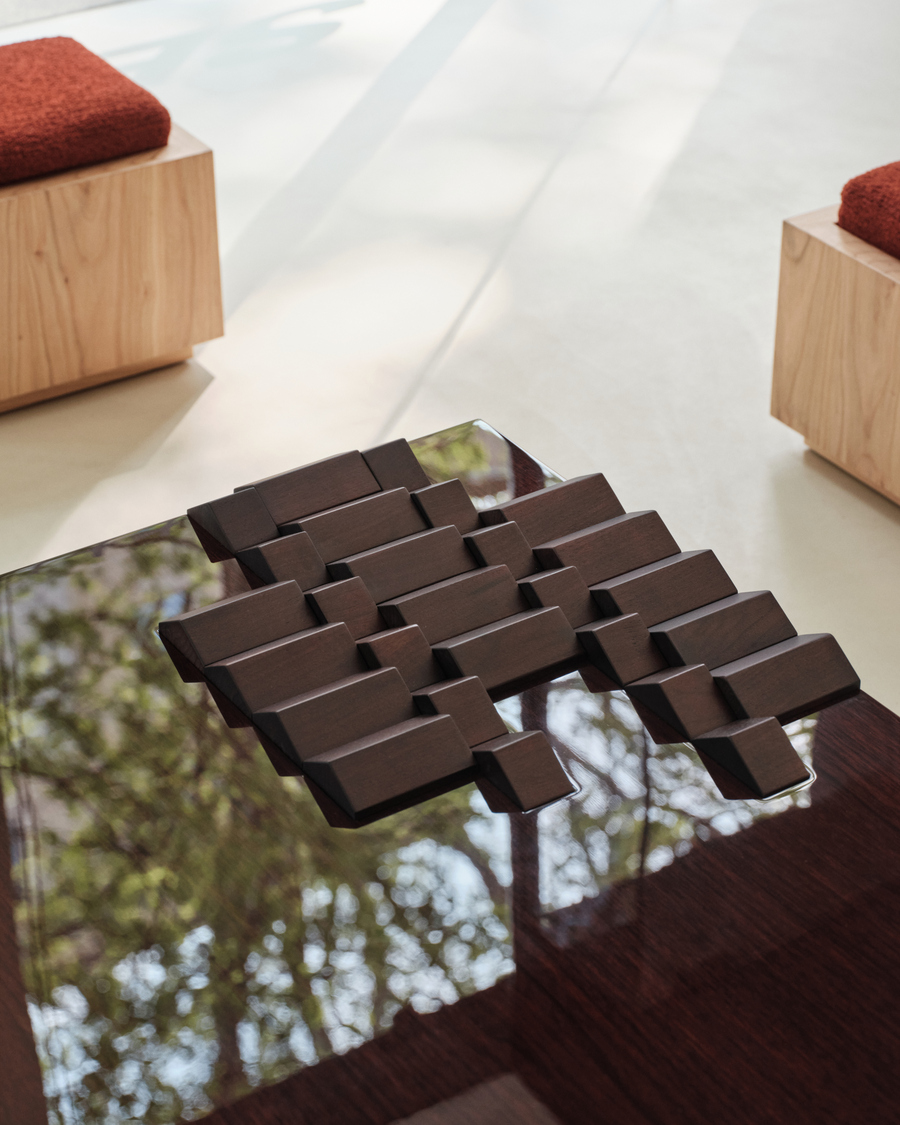
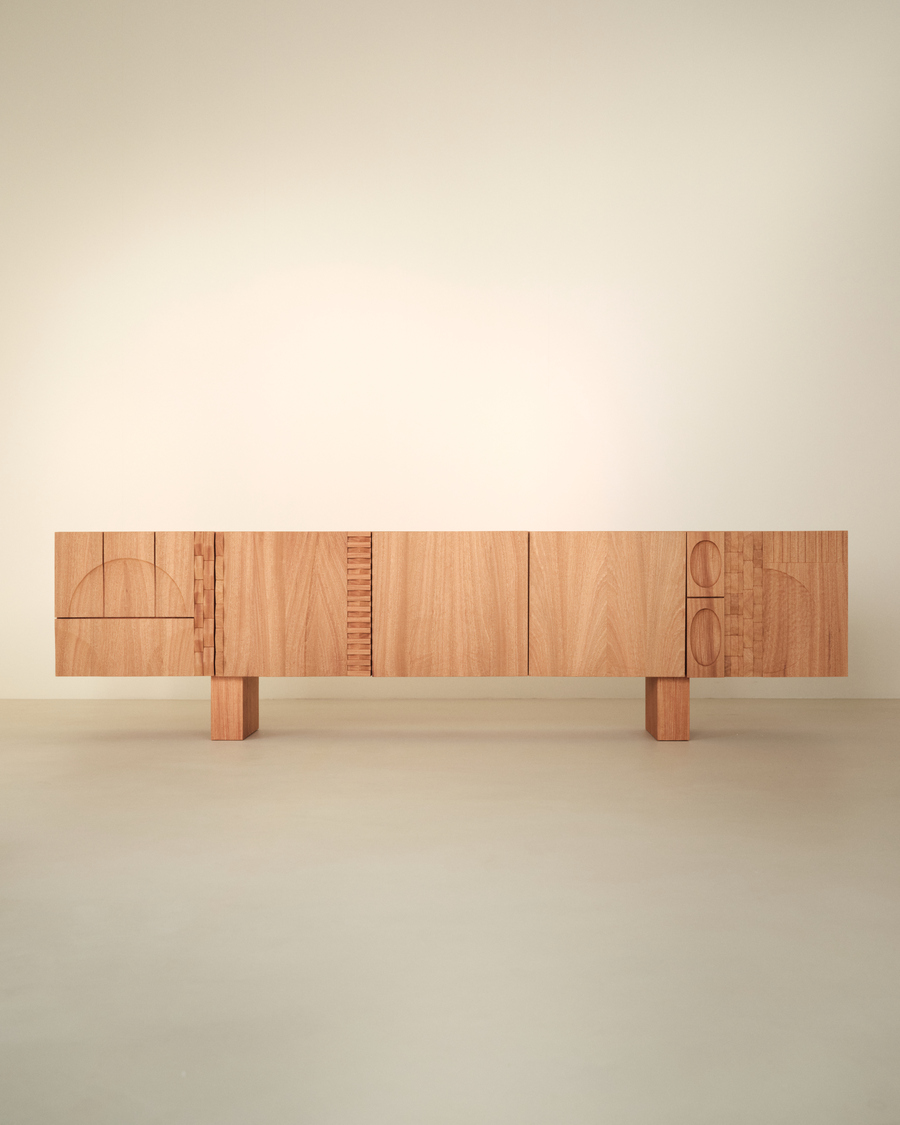
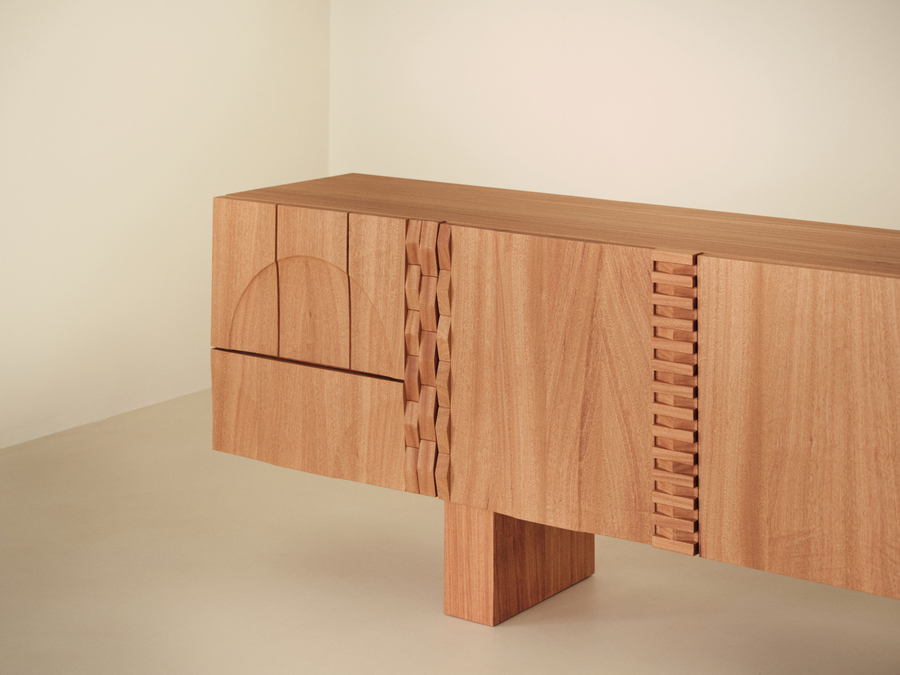
That idea, specifically, was to translate that sculptural language developed by those midcentury artists into a contemporary collection of monolithic wooden furniture. The resulting collection, titled ‘Core’, is composed of eight pieces wrought in solid mahogany, rosewood and cherry – each defined by an abstract, carved façade. ‘The form of the pieces is rather simple,’ Peer explains of the concept, which also sought inspiration in the wooden volumes of the French designer Pierre Chapo, American sculptor Leroy Setziol’s rhythmic wall-hung carvings and artist and artisan Jean Touret’s tactile wooden surfaces. ‘But at the same time, the bas-reliefs are very intricate.’
In developing ‘Core’, Peer’s intention was to centre the process of handiwork – a discipline he sees as increasingly rare in 2026. Peer was born in the mountainous northern Italian region of South Tyrol – known for its long tradition of wood carving and carpentry – and his work is deeply informed by that culture of making he was surrounded by growing up.
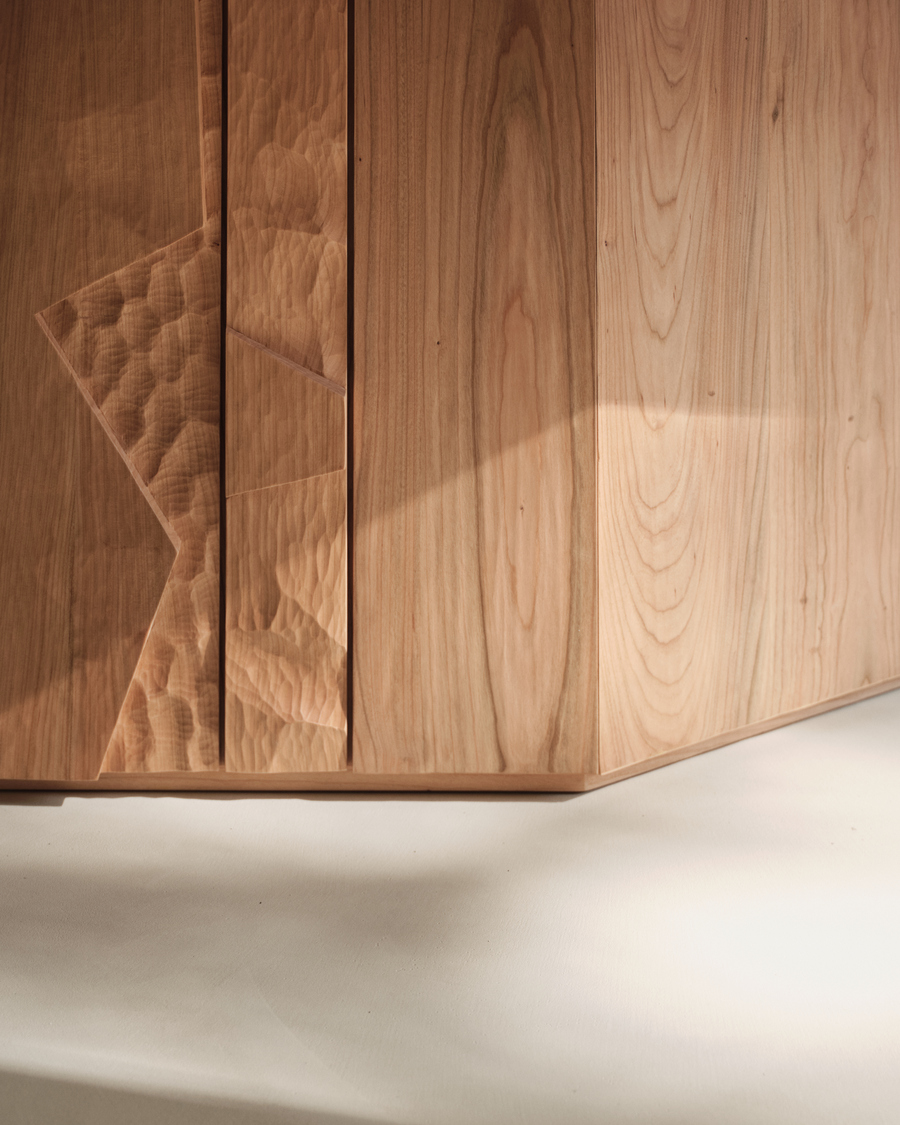
However, when confronted with the realities of production, he quickly realised that the scale of the pieces – coupled with the fact that they are editions, rather than one-offs – meant that it required a more digital approach. ‘We designed everything in 3D, including the imperfections in the wood,’ the designer explains. ‘It was almost as if we were hand-carving it digitally.’ The forms are then milled using a CNC carver, which translates those digital reliefs into precise cuts in solid wood.
Yet, to complete the pieces, a master craftsperson finishes each one by hand. ‘We needed our own Geppetto,’ Peer jokes, referring to Pinocchio’s creator in the Italian fairy tale. Each element is refined by a carpenter, who then treats the surface with a beeswax finish to achieve the collection’s warm, honey-coloured tone. ‘It’s very digital, but at the same time extremely handmade,’ notes Peer, ‘which I think is quite an interesting metaphor for 2026.’
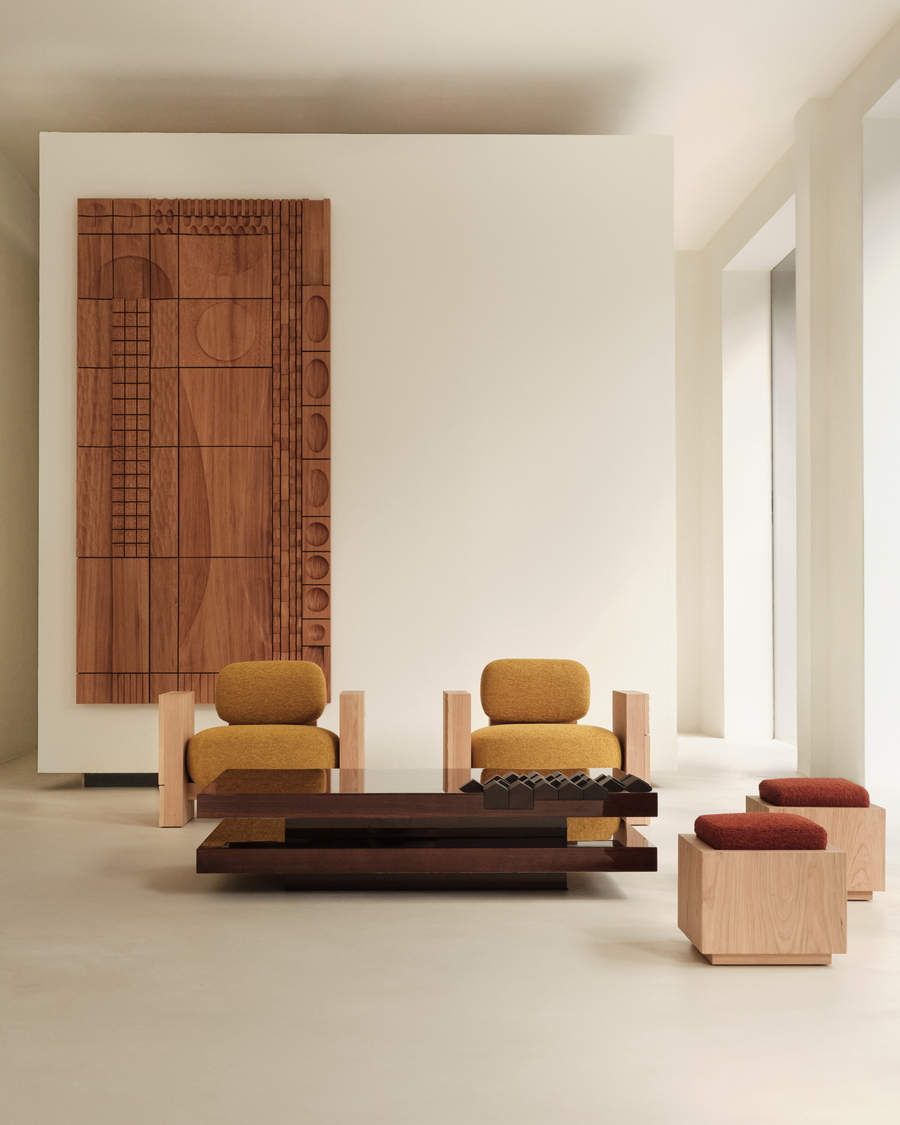
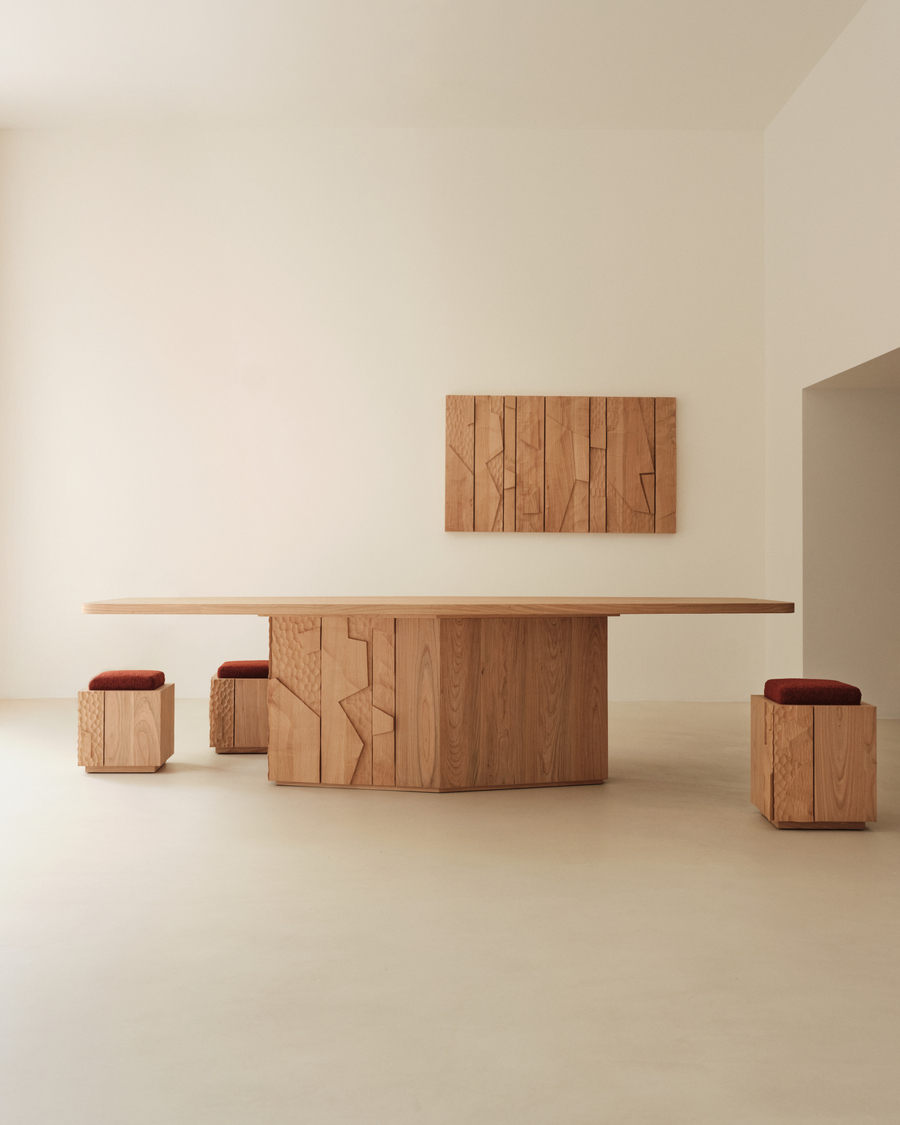
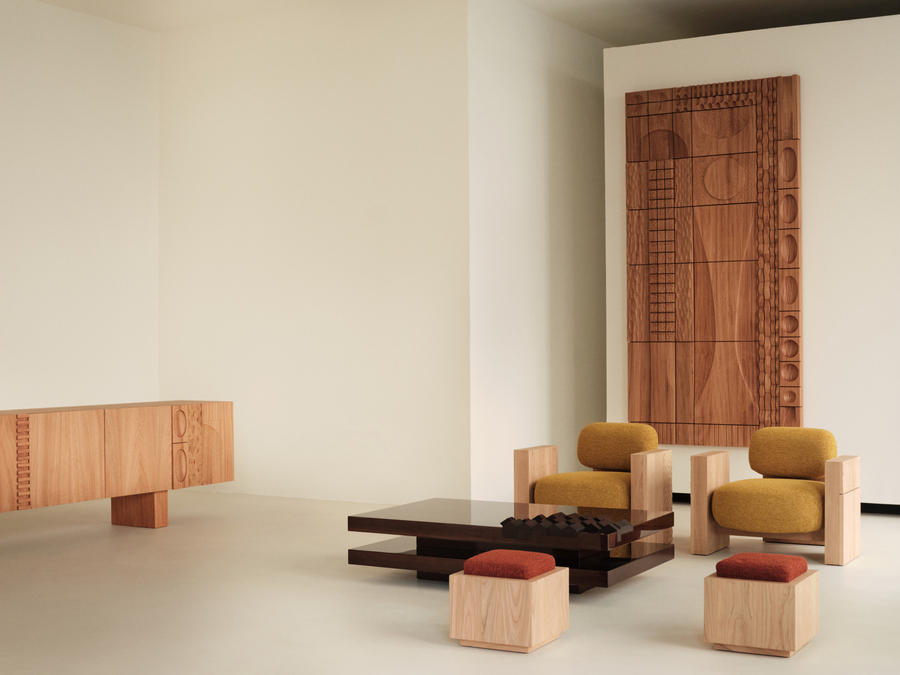
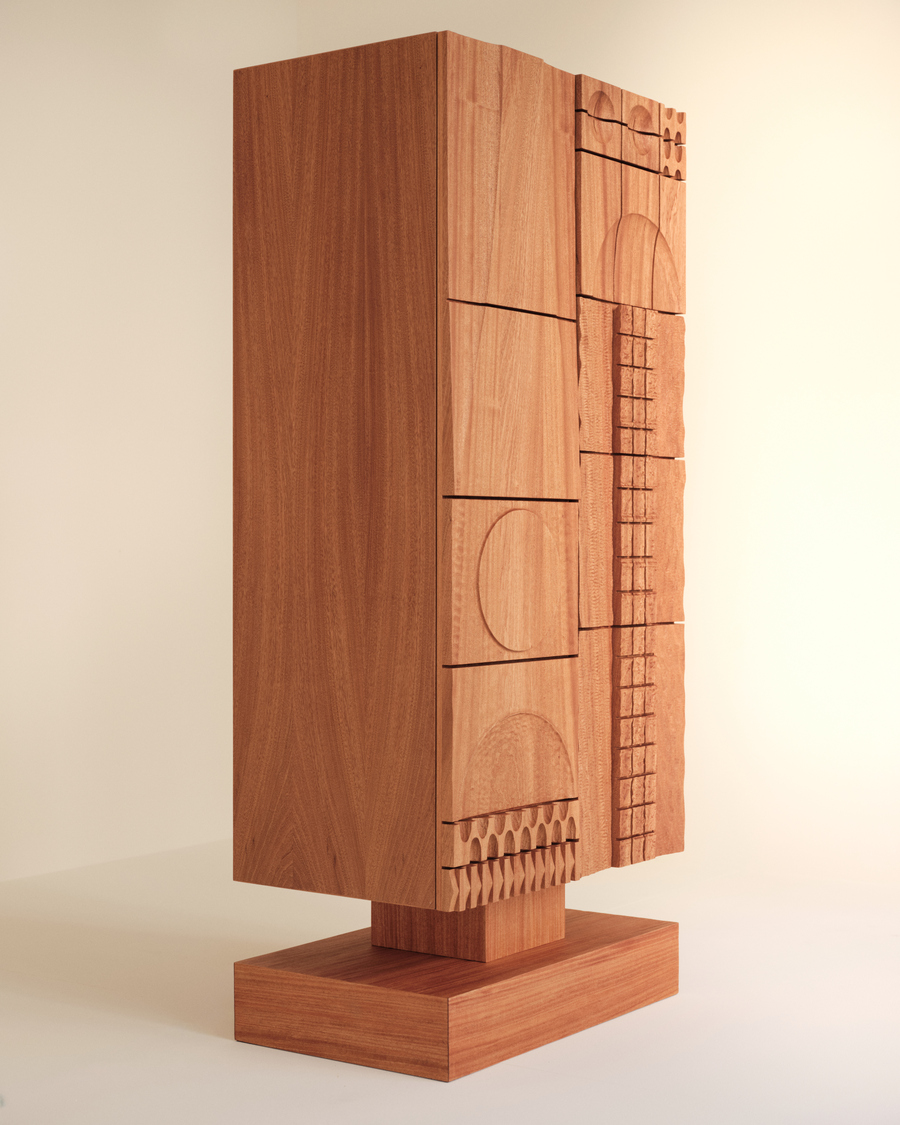
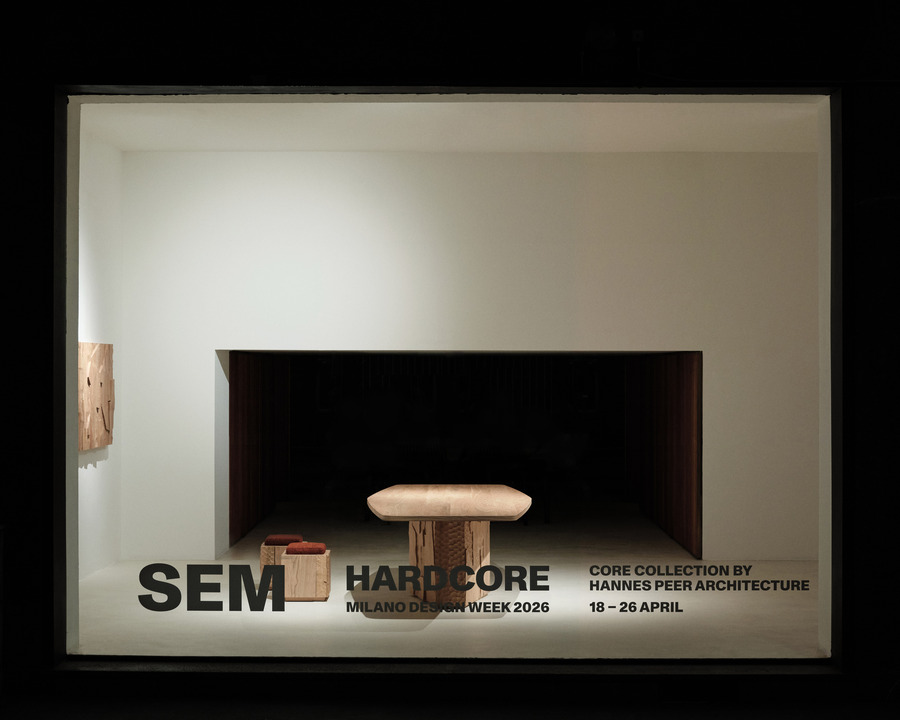
Among the collection is a monumental pedestal cabinet featuring shifting patterns that include a gouged wood grid, concave circles and repeating chevron motifs. There is a dining table, whose diamond-shaped base is zig-zagged with gouged wood sections that look like a series of carved strata, as if the surface had been cut back to reveal its layers. Peer also designed two wall-hanging panels, which strip away the functional aspect of the collection and crystallise it into purely sculptural art.
Peer presents the collection at the Spotti Milano showroom on viale Piave. The presentation, titled ‘Hardcore’, was conceived alongside SEM’s founder, Claudio Spotti and stages the collection in a stripped-back setting, highlighting the essential materiality of the carved wooden forms.
It was a visit to the Museum of Modern Art in New York that planted the seeds for architect and designer Hannes Peer’s latest collection for the Italian brand SEM. ‘On the museum’s top floor, there’s an entire room filled with the work of Louise Nevelson,’ recalls Peer, who was taken with the American artist’s stacked wooden assemblage sculptures from the 1970s. ‘That was the moment I decided to go all-in on this idea.’
That idea, specifically, was to translate that sculptural language developed by those midcentury artists into a contemporary collection of monolithic wooden furniture. The resulting collection, titled ‘Core’, is composed of eight pieces wrought in solid mahogany, rosewood and cherry – each defined by an abstract, carved façade. ‘The form of the pieces is rather simple,’ Peer explains of the concept, which also sought inspiration in the wooden volumes of the French designer Pierre Chapo, American sculptor Leroy Setziol’s rhythmic wall-hung carvings and artist and artisan Jean Touret’s tactile wooden surfaces. ‘But at the same time, the bas-reliefs are very intricate.’
In developing ‘Core’, Peer’s intention was to centre the process of handiwork – a discipline he sees as increasingly rare in 2026. Peer was born in the mountainous northern Italian region of South Tyrol – known for its long tradition of wood carving and carpentry – and his work is deeply informed by that culture of making he was surrounded by growing up.
However, when confronted with the realities of production, he quickly realised that the scale of the pieces – coupled with the fact that they are editions, rather than one-offs – meant that it required a more digital approach. ‘We designed everything in 3D, including the imperfections in the wood,’ the designer explains. ‘It was almost as if we were hand-carving it digitally.’ The forms are then milled using a CNC carver, which translates those digital reliefs into precise cuts in solid wood.
Yet, to complete the pieces, a master craftsperson finishes each one by hand. ‘We needed our own Geppetto,’ Peer jokes, referring to Pinocchio’s creator in the Italian fairy tale. Each element is refined by a carpenter, who then treats the surface with a beeswax finish to achieve the collection’s warm, honey-coloured tone. ‘It’s very digital, but at the same time extremely handmade,’ notes Peer, ‘which I think is quite an interesting metaphor for 2026.’
Among the collection is a monumental pedestal cabinet featuring shifting patterns that include a gouged wood grid, concave circles and repeating chevron motifs. There is a dining table, whose diamond-shaped base is zig-zagged with gouged wood sections that look like a series of carved strata, as if the surface had been cut back to reveal its layers. Peer also designed two wall-hanging panels, which strip away the functional aspect of the collection and crystallise it into purely sculptural art.
Peer presents the collection at the Spotti Milano showroom on viale Piave. The presentation, titled ‘Hardcore’, was conceived alongside SEM’s founder, Claudio Spotti and stages the collection in a stripped-back setting, highlighting the essential materiality of the carved wooden forms.